
01
Customer-facing applications
The product your customers actually use: booking journeys, account areas, self-service flows and the paths where friction shows up directly in the commercial numbers.
WebMobileJourneys
Engineering
Product engineering for the applications a part of your business genuinely depends on: customer journeys, partner platforms, operational workspaces and the services behind them. Design and engineering in one team, delivered in stages you can release, review and fund incrementally.
The business problem
They fail because the scope was agreed before anyone understood the problem, the first working version arrived too late to change anything, and the team that built it had no stake in operating it.
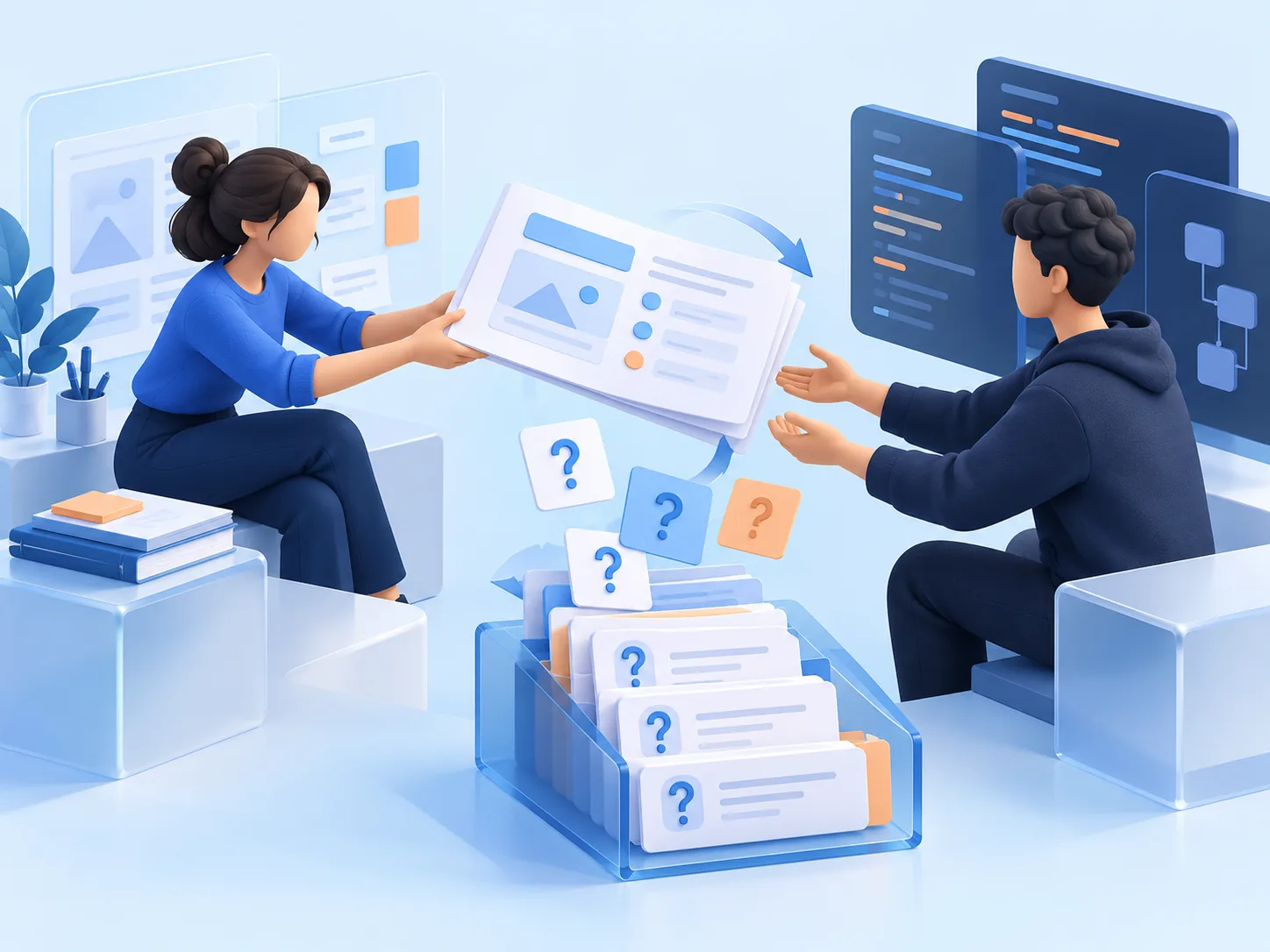
The requirements document was accurate on the day it was signed and obsolete a month later.
The first demo arrives at a point where changing direction means writing off real money.
Design and engineering negotiate through tickets rather than working from the same understanding.
Nobody owns the difference between "feature complete" and "safe to put in front of customers".
The handover is a repository and a wiki page, and the knowledge leaves with the contract.
Everything works until the first genuinely concurrent week of real usage.
Our approach
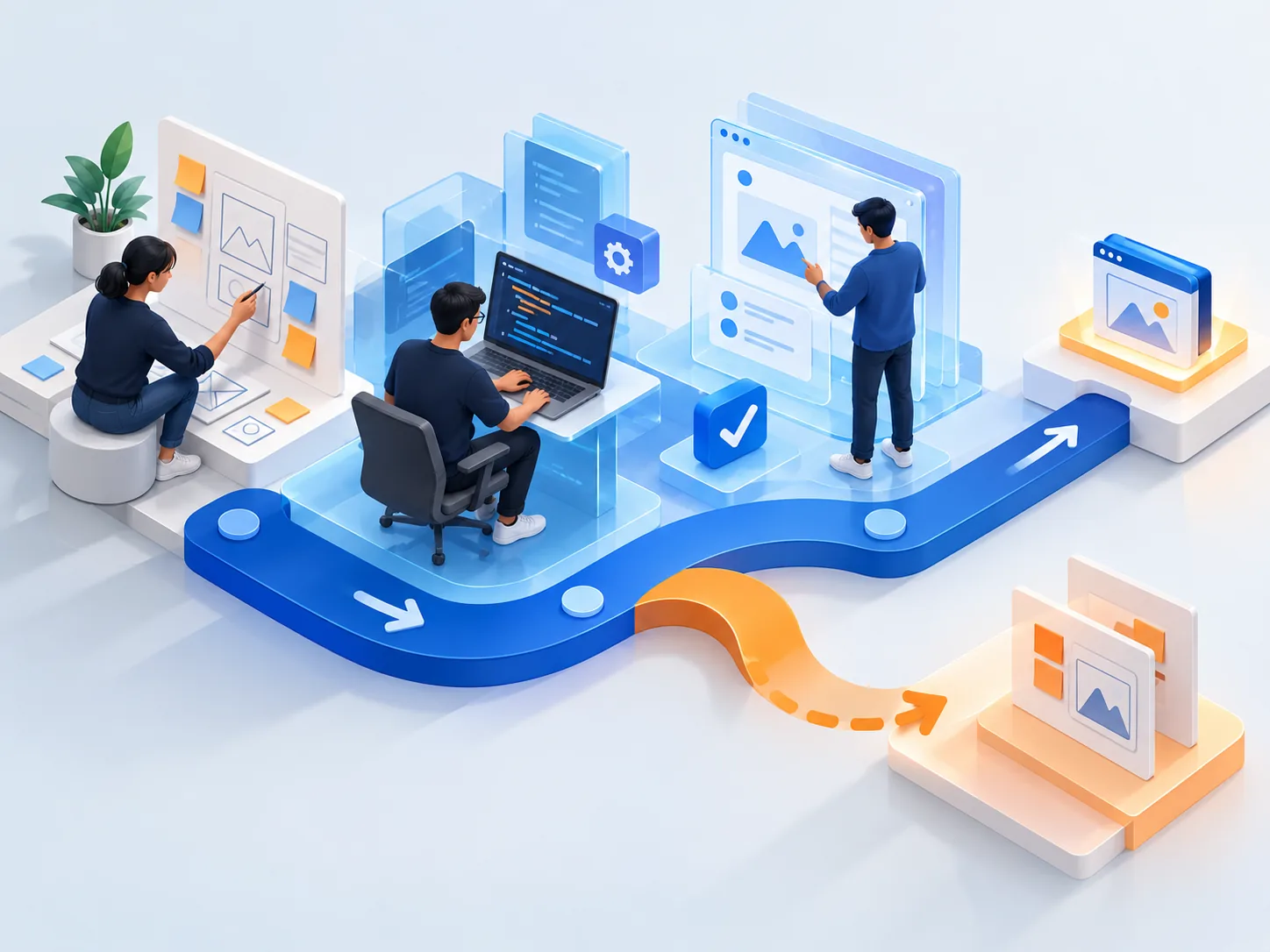
We deliver in stages that are each releasable and reviewable. That is not an agile slogan; it is a commercial mechanism. It means your team sees working software at a point where a change of direction costs a sprint rather than a quarter.
Design and engineering sit in the same team. A great deal of avoidable cost in product work comes from a design handed over as a specification, discovered to be expensive, and renegotiated through a backlog. Removing that handoff removes the negotiation.
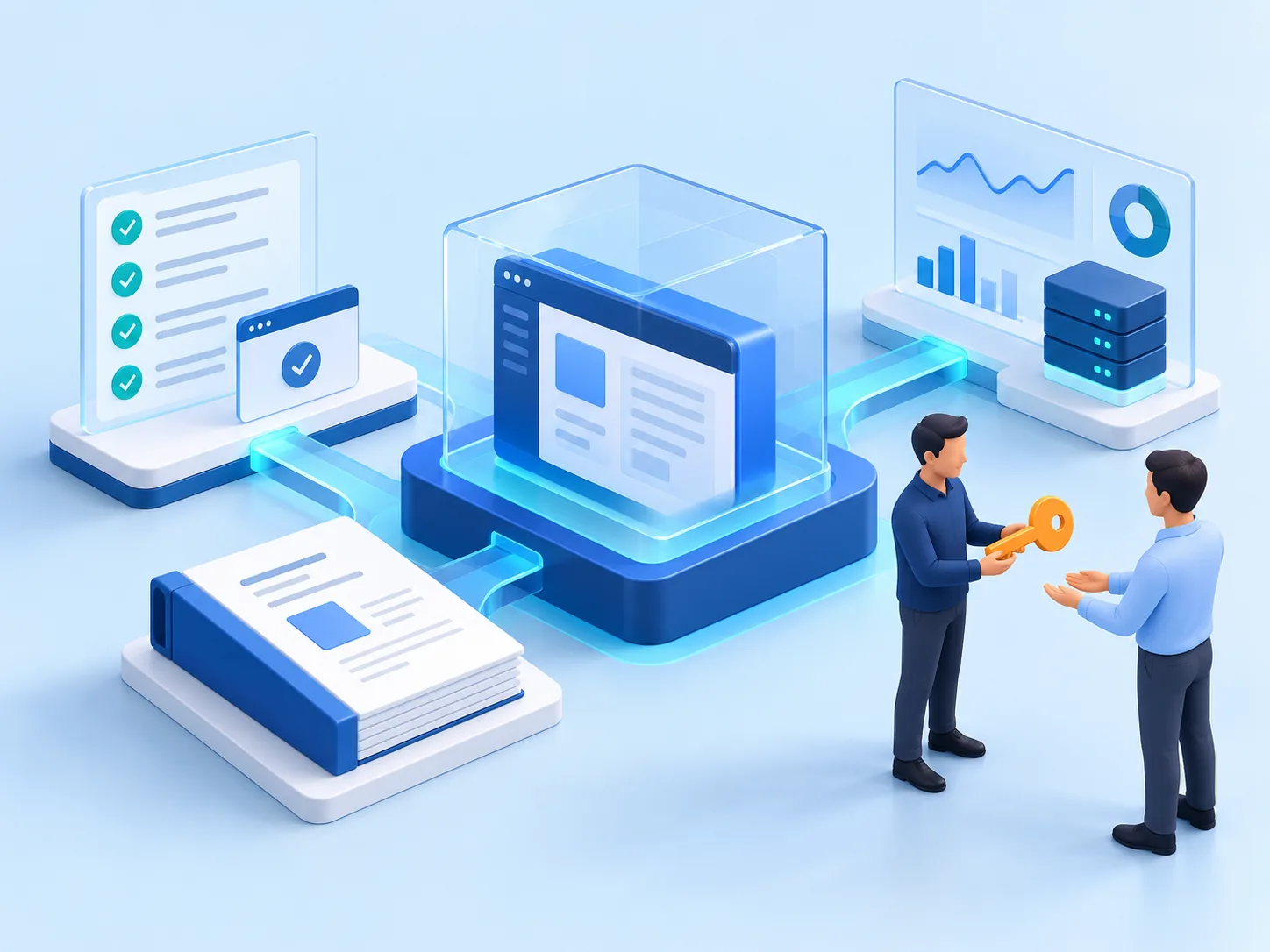
We also build for the handover from the first week. Every engagement is designed so your own team can take it over, and the documentation is written for the people who will operate it rather than for the people who built it. If we are still the only ones who understand it a year in, we have done the job badly.
Capabilities
The common thread is software that a part of the business depends on — not prototypes, and not marketing sites.
01
The product your customers actually use: booking journeys, account areas, self-service flows and the paths where friction shows up directly in the commercial numbers.
02
Platforms your partners and agents work in, where permissions, tenancy and reporting are the hard part rather than the interface.
03
The unglamorous systems your team spends its day inside. Usually the highest-return engineering in a business and the least likely to be prioritised.
04
The services, delivery pipelines and environments underneath the product, which decide how quickly and how safely anything can be changed later.
Delivery model
Scope and sequence are agreed before engineering begins, and every stage is reviewable.
01
Understand the operation, establish a baseline and identify the single outcome the first release has to achieve. Ends in a scoped release, not a deck.
02
Work through the experience and the architecture together, including the access controls and the data model, so the expensive decisions are made deliberately.
03
Each stage is something you could ship. That constraint is what keeps the project honest about progress.
04
Load, failure modes, monitoring and the operational edge cases. This is a phase, not an afterthought at the end of the last sprint.
05
Support the first weeks of real use, fix what only real usage exposes, and transfer ownership deliberately.
How we work together
Start with a conversation. Commit to scoped work only when a deeper review or a build is genuinely the right next step — and only once the scope is written down.
Start here — free call
01
Free30 minutes
One workflow, discussed with a solutions architect. What it costs you today, what is technically in the way, and whether anything further is warranted.
02
USD 5,0004 weeks
A scoped review when the picture is genuinely unclear — several systems, an unproven integration, or a decision nobody can size yet.
03
From USD 25,000Scoped per engagement
An agreed priority turned into working software, connected systems or a governed AI workflow, delivered in stages you can release and review.
Larger platform programmes start at USD 75,000. All figures are in USD and are starting points rather than quotes — scope, integration surface and the number of systems involved move the number. Commercial terms are always confirmed in writing before work begins.
Before we talk
Often, and it tends to produce the better outcome. The arrangement needs to be explicit about who owns what — architecture decisions, code review, release authority — because ambiguity there causes more friction than any technical disagreement. We will propose a working model rather than assuming one.
We choose based on what your team can maintain after we leave, not on what is interesting to build with. If your engineers are strongest in a particular stack, that weighs heavily. Handing over a system nobody in-house can operate is a failure regardless of how well it was engineered.
Yes, and the honest first step is an assessment rather than a plan. We look at the state of the code, the tests, the deployment path and the operational history, then tell you what is worth keeping and what is not. Occasionally that assessment says the sensible thing is to keep your current team and fix the process instead.
Whatever you have scoped, and that conversation happens before launch rather than during the first incident. Some clients want ongoing engineering support; some want a defined handover and to run it themselves. Both are fine, but which one it is changes how we document and structure the work from the start.
Keep exploring
Start with a conversation
Bring us the process that is slowing you down, the system that will not connect, or the platform that needs to evolve. We will tell you what we would do about it — and whether you need us at all.
Free · 30 minutes with a solutions architect · No obligation to commission an audit · sales@appnox.ai