
01
Enquiry structuring
Inbound requests turned into structured, owned work with the missing information identified at capture rather than discovered at quoting.
CaptureCompletenessOwnership
Industry · DMCs and operators
DMCs and tour operators build bespoke product for every enquiry. That is the commercial advantage and the operational constraint, because almost none of the knowledge involved is written down anywhere a system can use.

The business problem
Each itinerary means juggling supplier availability, custom requests and version after version of a quote. The work is genuinely skilled — and a surprising share of it is reconstruction rather than judgement.

A quote is rebuilt from scratch because the last similar one cannot be found or reused.
Supplier availability is confirmed by email and held in an inbox, not a system.
Quote versions proliferate and nobody is certain which one the client is looking at.
The consultant who owns an account is a single point of failure for its knowledge.
Margin per itinerary is known approximately, and usually after the fact.
Peak season is survived rather than managed, because capacity cannot flex.
Our approach
The valuable thing a DMC sells is judgement about destinations, suppliers and travellers. The expensive thing it does is reconstruct context — finding the previous similar itinerary, re-confirming what a supplier said, working out which quote version is live.
We build the structure that makes the reusable part reusable: itineraries and components held as structured data rather than documents, supplier responses captured where the system can see them, and a single authoritative version of every quote.
Assistance then goes where it removes reconstruction, not where it removes taste. A consultant should start from a prepared, editable structure based on what has worked before — and should still be the one deciding whether it is right for this traveller.

Capabilities
Usually with whichever of these causes the most rework during peak season.
01
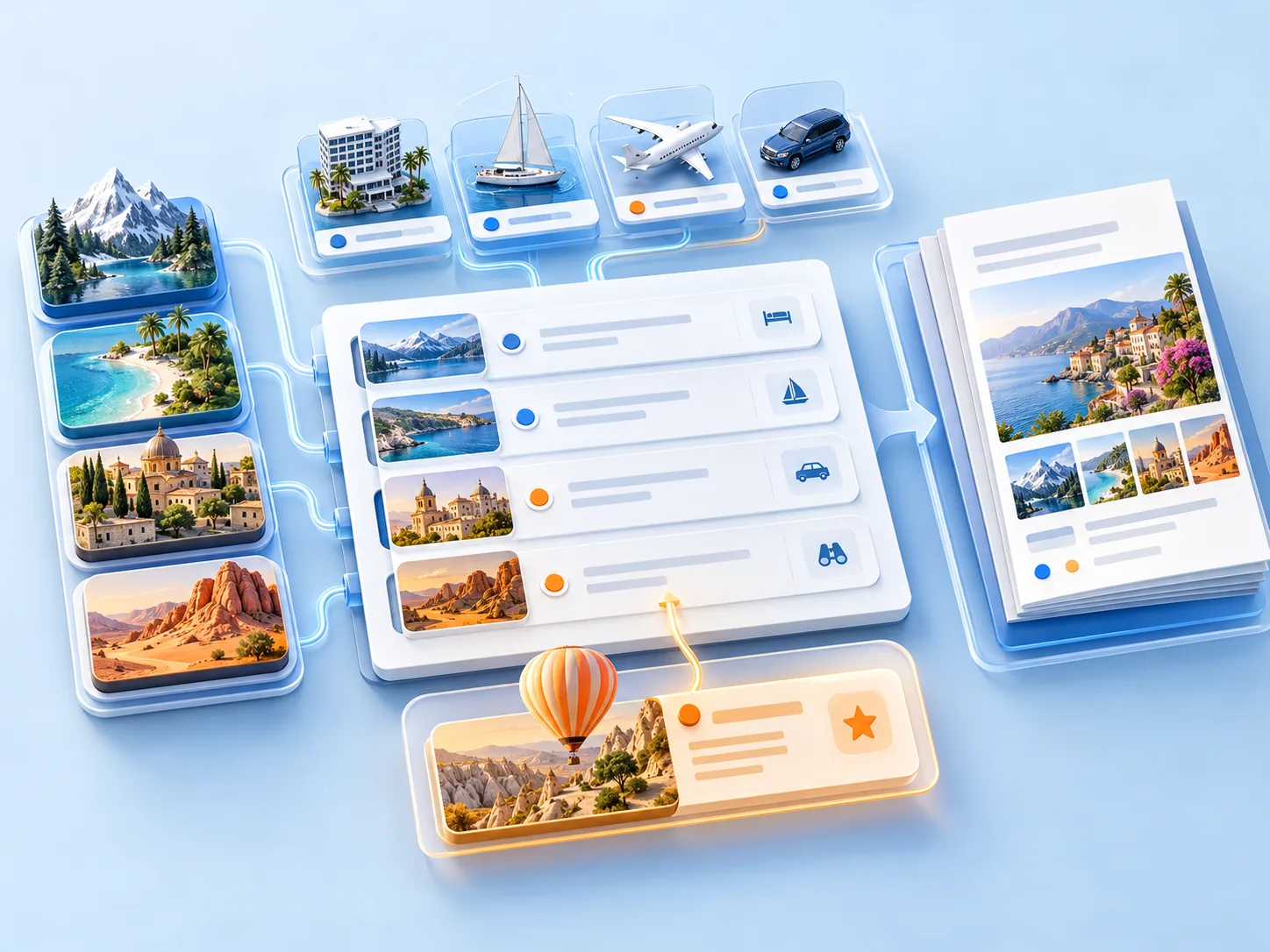
Inbound requests turned into structured, owned work with the missing information identified at capture rather than discovered at quoting.
02
The components and past itineraries your team builds from, held as searchable data — so a similar trip starts from something rather than from a blank document.
03
Availability requests and responses tracked in one place with deadlines visible, instead of living in individual mailboxes.
04
One authoritative quote with version history and a clear client-facing view, so the conversation is about the trip rather than about which document is current.
Delivery model
Scope and sequence are agreed before engineering begins, and every stage is reviewable.
01
Trace recent trips end to end — enquiry to final invoice — through every system, document and inbox. The rework is visible immediately and it is rarely where people expect.
02
Agree what an itinerary is made of in your business. This is the foundation for reuse and it is a commercial conversation as much as a technical one.
03
Structured components and a single authoritative quote first. Reuse and version clarity deliver most of the early gain.
04
Move availability requests out of inboxes and into a tracked workflow with visible deadlines.
05
Only once the structured foundation exists is assisted preparation genuinely useful — otherwise there is nothing worth drawing on.
How we work together
Start with a conversation. Commit to scoped work only when a deeper review or a build is genuinely the right next step — and only once the scope is written down.
Start here — free call
01
Free30 minutes
One workflow, discussed with a solutions architect. What it costs you today, what is technically in the way, and whether anything further is warranted.
02
USD 5,0004 weeks
A scoped review when the picture is genuinely unclear — several systems, an unproven integration, or a decision nobody can size yet.
03
From USD 25,000Scoped per engagement
An agreed priority turned into working software, connected systems or a governed AI workflow, delivered in stages you can release and review.
Larger platform programmes start at USD 75,000. All figures are in USD and are starting points rather than quotes — scope, integration surface and the number of systems involved move the number. Commercial terms are always confirmed in writing before work begins.
Before we talk
The aim is not to template the trip; it is to stop your consultants rebuilding the same components from scratch. Structure the reusable pieces — a transfer, a property, a guided day — and the consultant still assembles and judges them. If anything, less time spent reconstructing means more spent on the part clients are paying for.
Possibly not. Many reservation systems handle the booking well and the pre-booking workflow poorly, which is where DMC time actually goes. The first question is what your existing system genuinely covers, and we would rather extend it than replace it.
The workflow around them, yes — requests, responses, deadlines and history. What it does not do is replace the relationship, and it should not try to. Automated supplier negotiation is a bad idea in a business where relationships carry commercial value.
Off-peak, which is the honest answer and often not the convenient one. Implementation needs your consultants' attention, and taking it during peak is how these projects fail. We would rather start later and finish than start immediately and stall.
Keep exploring
Start with a conversation
Bring us the process that is slowing you down, the system that will not connect, or the platform that needs to evolve. We will tell you what we would do about it — and whether you need us at all.
Free · 30 minutes with a solutions architect · No obligation to commission an audit · sales@appnox.ai