Servicing is where the margin goes. Assist it, do not automate it blindly.
Amendments, cancellations, schedule changes and mid-trip exceptions consume agent time long after the booking is banked. We build the assisted workflows that reduce that load — with explicit boundaries around what a system may do alone.
Selling the trip is one transaction. Servicing it is an open-ended sequence of small interruptions, each one cheap on its own and expensive in aggregate, and almost none of them appear in the margin calculation made at the point of sale.
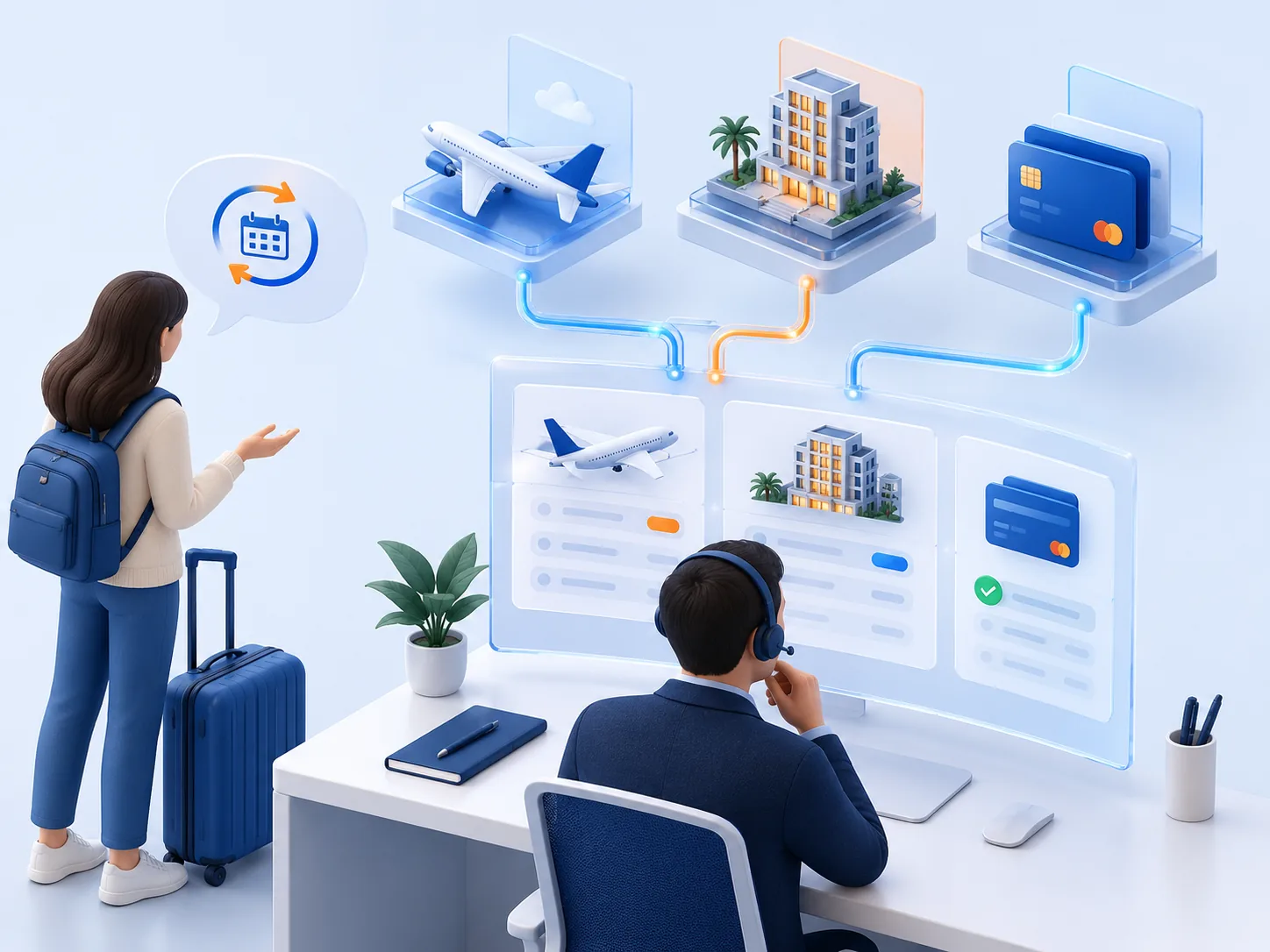
A schedule change from one supplier triggers manual work across three systems and two customer conversations.
Agents rebuild the same context repeatedly because servicing history lives in whoever handled it last.
Simple amendments take a senior agent because the permissions to do them were never separated from the judgement.
Out-of-hours exceptions escalate to whoever answers, rather than to whoever should.
Nobody can quantify servicing cost per booking, so it never gets prioritised against new sales.
The same five questions arrive constantly, and answering them is nobody's measured job.
Our approach
Define the boundary before you build the agent.
The important question about an AI agent in a travel operation is not whether it can perform an action. It is whether the business has decided when that action is permitted, and what happens when the result is uncertain.
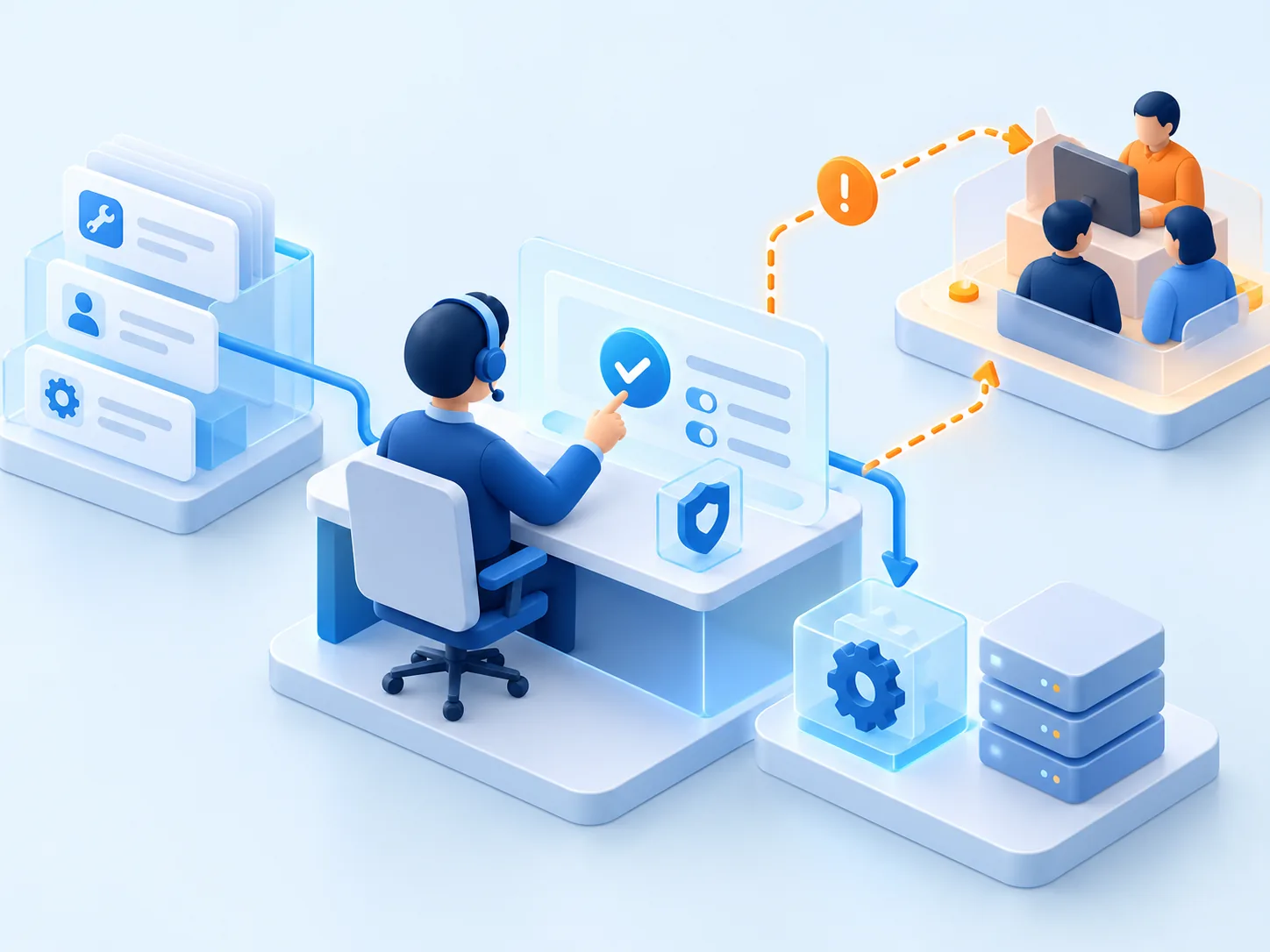
So we start with the boundary. Which servicing actions are reversible and low-value enough to complete automatically. Which require a person to approve them. Which must never be automated at all because the commercial or duty-of-care exposure is real — and those sit on the human side of the line by default, not by exception.
Only then do we build. An assisted servicing workflow assembles the context, proposes the action, and either executes within the agreed boundary or presents a reviewed recommendation to an agent who can act in one step instead of ten. Every automated action is logged in a way that lets you answer "why did this happen" months later.
Action boundary designAn explicit register of what may be automated, what needs approval and what never runs unattended.
Context assemblyBooking, traveller, supplier and history gathered before an agent is asked to make a decision.
Reviewed recommendationsA proposed next action with its reasoning, that an agent accepts, edits or rejects in one step.
Supplier change handlingInbound schedule and availability changes routed to the right workflow instead of an inbox.
AuditabilityA record of what was proposed, what was approved, by whom, and on what information.
Capabilities
What we typically build
Servicing work is specific to your product and your suppliers, so these are patterns rather than a menu.
01
Agent servicing workspace
A working surface where the booking, the traveller, the supplier position and the conversation history are in one place, so an agent stops assembling context by hand before every interaction.
Unified contextOne-step actionsHistory
02
Assisted amendment flows
Common amendments prepared end to end and presented for approval, so the routine cases stop consuming senior judgement and the complex ones get more of it.
ProposalApprovalExecution
03
Disruption handling
Schedule changes and cancellations triaged by impact and traveller status, with prepared communications rather than a scramble at 6am.
Supplier feedsPrioritisationTraveller comms
04
Knowledge and policy assist
Answers grounded in your own fare rules, supplier terms and internal policy, with the source shown, rather than a general-purpose model guessing at your commercial terms.
RetrievalGroundingCitations
Delivery model
How the work runs
Scope and sequence are agreed before engineering begins, and every stage is reviewable.
01
Map servicing reality
Shadow the actual work for a period. Servicing processes are almost never what the documented process says, and the difference is the whole point of the exercise.
02
Write the action register
Agree, action by action, what may run unattended, what needs approval and what is off-limits. Signed off by whoever owns the commercial risk, not by the project team alone.
03
Build the assist, not the autopilot
Deliver the context assembly and the reviewed recommendation first. Almost all of the time saving is here, and it carries a fraction of the risk.
04
Automate inside the boundary
Move the genuinely safe actions to unattended execution once the assisted version has been running long enough to trust the proposals.
05
Measure and hand over
Compare against the servicing baseline, document the boundary and the reasoning behind it, and make sure your team can change it without us.
How we work together
A free first step. A scoped investment after that.
Start with a conversation. Commit to scoped work only when a deeper review or a build is genuinely the right next step — and only once the scope is written down.
Start here — free call
01
Strategy call
Free30 minutes
One workflow, discussed with a solutions architect. What it costs you today, what is technically in the way, and whether anything further is warranted.
Larger platform programmes start at USD 75,000. All figures are in USD and are
starting points rather than quotes — scope, integration surface and the number of systems involved
move the number. Commercial terms are always confirmed in writing before work begins.
Before we talk
A few useful answers.
Only if you decide it should, for a defined set of low-risk communications, and with an approval step unless you explicitly remove it. The default posture is that anything reaching a traveller is reviewed, because a wrong message about a cancelled flight costs far more than the time it saved.
The action register is enforced in the system, not just documented. An action outside the agreed boundary is not something the agent is permitted to attempt, and uncertain cases route to a person rather than resolving to a best guess. Every automated action is logged with the information it acted on.
This is usually where the clearest case sits, because the alternative is either an expensive rota or an unanswered traveller. Assisted triage and prepared responses out of hours, with human approval for anything material, tends to be more defensible than either extreme.
Normally not, and we would push back on a proposal that started there. What matters is what your booking platform exposes and what your suppliers permit. We assess that per project rather than assuming connectivity, and we tell you where the real limits are before scope is agreed.
One workflow. Thirty minutes. A clearer next step.
Bring us the process that is slowing you down, the system that will not connect, or the platform that needs to evolve. We will tell you what we would do about it — and whether you need us at all.