
01
Opportunity workspace
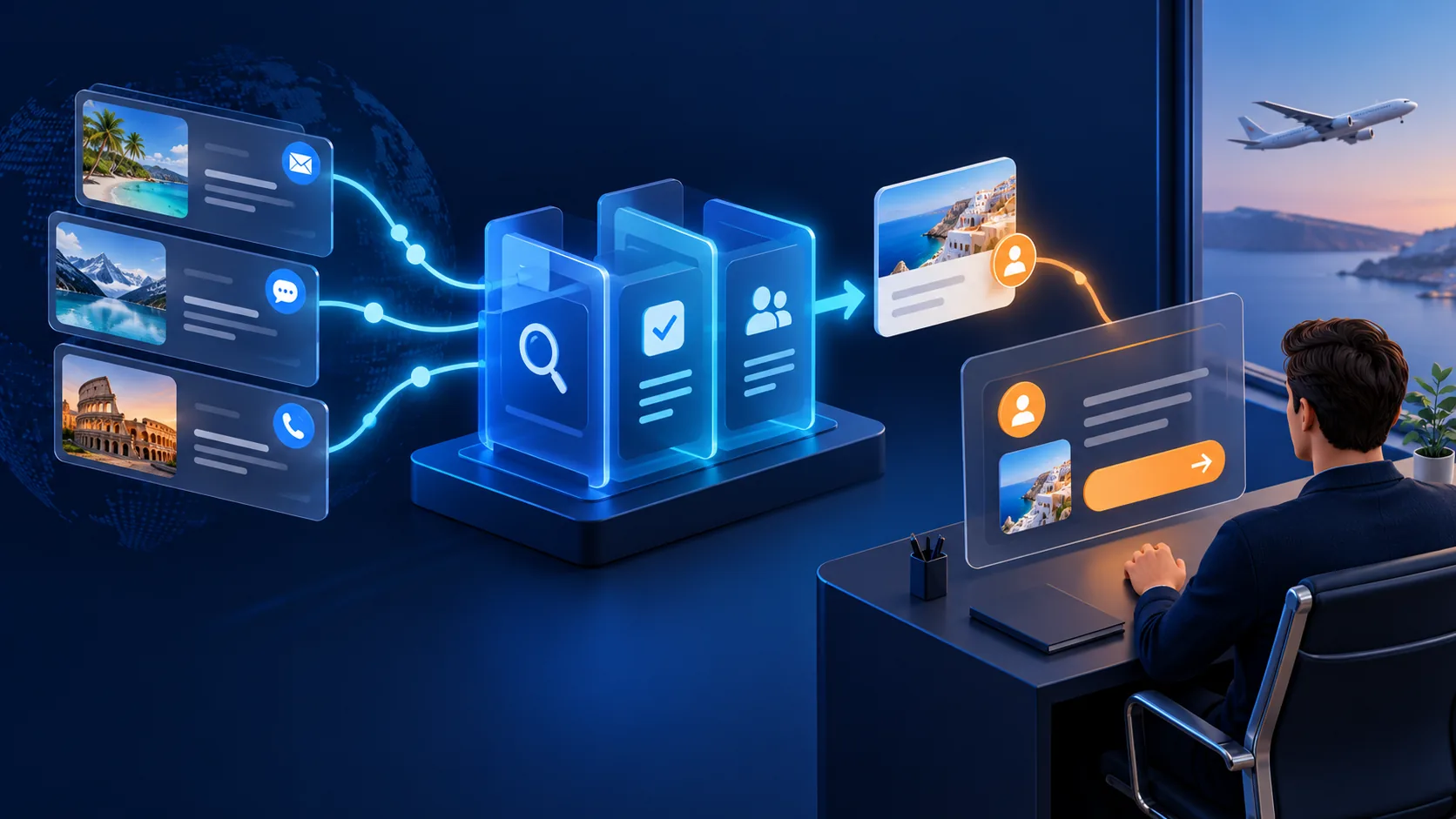
A working view of live opportunities with owner, stage, next action and how long it has been quiet — designed for a consultant's morning, not for a quarterly board pack.
OwnershipNext actionAgeing
Travel technology · Sales operations
Quotes go out and then nothing happens, because the next action belonged to nobody in particular. We build the ownership, visibility and reviewed follow-up that turn a pipeline from a list into a process.
The business problem
Travel sales rarely fail at the quoting stage. They fail in the silence afterwards, when a consultant is deep in another itinerary and the follow-up that would have closed the booking is not on anyone's list.
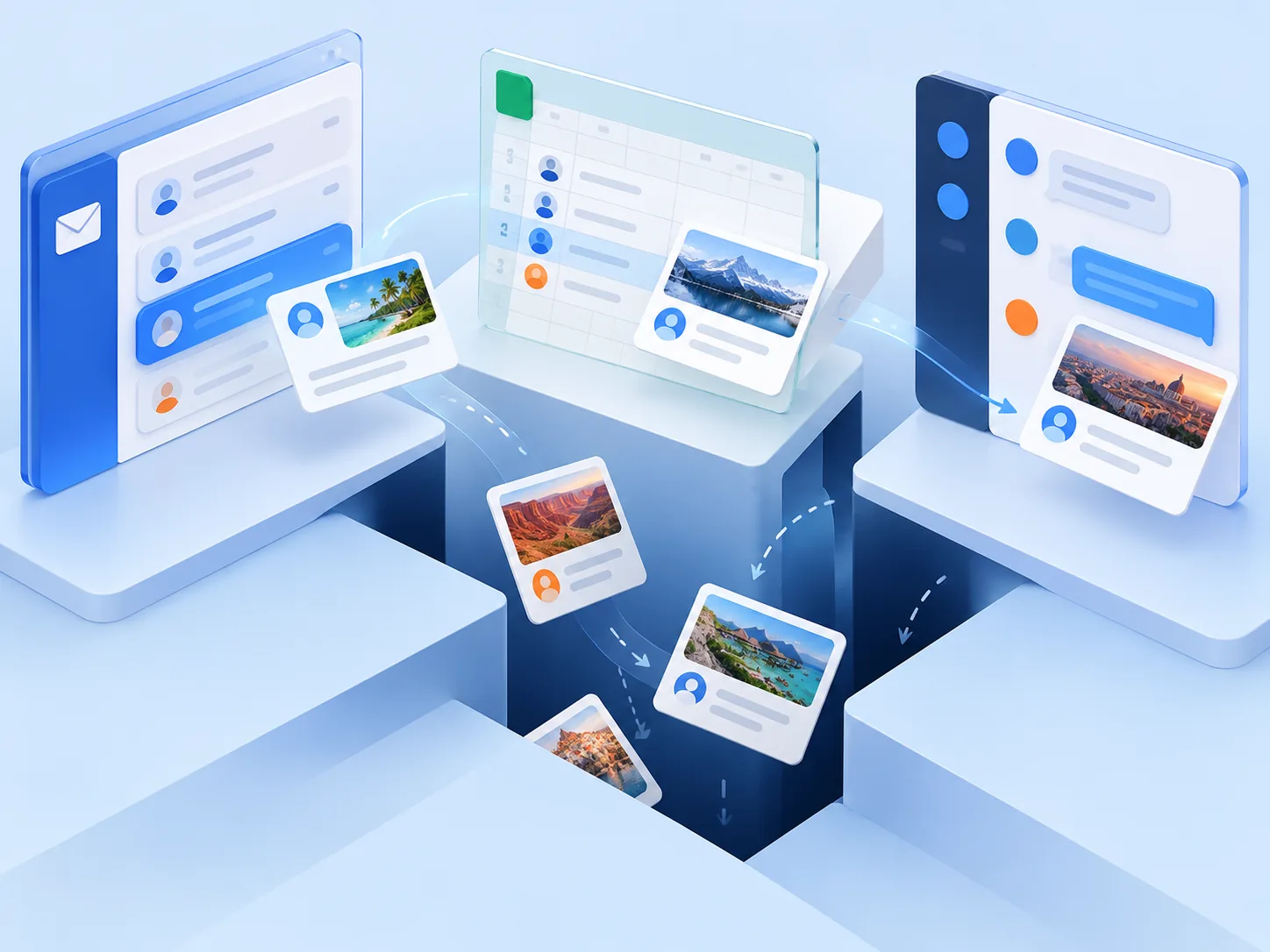
A quote is sent and the next action exists only in the consultant's memory.
Ownership is ambiguous when an enquiry passes between people or channels.
Follow-up quality varies enormously between consultants, and nobody can see it happening.
Opt-outs and booking-elsewhere signals do not reliably stop further chasing.
CRM records are created inconsistently, so pipeline reporting is not trusted by the people it is for.
Managers find out a deal went cold at the review, not at the point it went quiet.
Our approach
This is deliberately unglamorous work. The gain does not come from a model predicting intent; it comes from a pipeline where every live opportunity has a named owner, a next action and a date, and where the system notices when that date passes.
On top of that we add assistance where it earns its place: preparing a follow-up in context, surfacing which opportunities have gone quiet and why that matters, and making sure a reply, an opt-out or a confirmed booking elsewhere stops the sequence rather than being overtaken by it.
Appnox also publishes PipeClose, a product in this space. We will say plainly whether the product fits your case or whether a custom workflow around your existing CRM is the better answer — they are different engagements with different economics, and conflating them serves nobody.

Capabilities
The starting point is usually whichever of these your current process leaks most from.

01
A working view of live opportunities with owner, stage, next action and how long it has been quiet — designed for a consultant's morning, not for a quarterly board pack.
02
A prepared next message that carries the quote context, ready for a consultant to send, edit or discard. Approval stays in the loop by default.
03
The unglamorous plumbing that stops follow-up when it should stop. Getting this wrong damages the relationship and, depending on jurisdiction, the compliance position.
04
Reporting built on records that are actually created consistently, so the numbers survive contact with the people who are measured on them.
Delivery model
Scope and sequence are agreed before engineering begins, and every stage is reviewable.
01
Trace a real enquiry from arrival to outcome, through every system and inbox it touches. The leak is usually visible within the first two of these.
02
A pipeline without clear ownership will not be rescued by automation; it will just chase people faster. Ownership and next action come first.
03
Introduce prepared, reviewed follow-up for one segment, with stop conditions working from day one rather than added later.
04
Run it with a single team against the baseline before it goes wider, so the comparison means something.
05
Widen to other teams and segments, and document it so your own operations people can change the rules without an engineering ticket.
How we work together
Start with a conversation. Commit to scoped work only when a deeper review or a build is genuinely the right next step — and only once the scope is written down.
Start here — free call
01
Free30 minutes
One workflow, discussed with a solutions architect. What it costs you today, what is technically in the way, and whether anything further is warranted.
02
USD 5,0004 weeks
A scoped review when the picture is genuinely unclear — several systems, an unproven integration, or a decision nobody can size yet.
03
From USD 25,000Scoped per engagement
An agreed priority turned into working software, connected systems or a governed AI workflow, delivered in stages you can release and review.
Larger platform programmes start at USD 75,000. All figures are in USD and are starting points rather than quotes — scope, integration surface and the number of systems involved move the number. Commercial terms are always confirmed in writing before work begins.
Before we talk
No. PipeClose is an Appnox product for AI-assisted sales follow-up; this is a consulting engagement that builds around whatever CRM you already run. Sometimes the product is the right answer, sometimes a custom workflow is, and occasionally the honest answer is that your process problem does not need software at all. The free call is where we work out which.
Only if you choose that, and we would usually advise against it as a starting point. The default is that follow-up is prepared and a consultant approves it. Unattended sending is something to earn once the prepared version has been running and the stop conditions have proven reliable.
No, and you should be wary of anyone who does. No software can compensate for unavailable inventory, an unsuitable offer or a traveller who was never going to book. What this work can do is make sure the follow-up that would have happened actually happens, consistently, with the context attached.
It usually is, and that is worth knowing before rather than after. Part of the early work is establishing whether the existing data can carry the process or whether a cleanup is a prerequisite. If it is, we will say so — that scope is not hidden inside the build.
Keep exploring
Start with a conversation
Bring us the process that is slowing you down, the system that will not connect, or the platform that needs to evolve. We will tell you what we would do about it — and whether you need us at all.
Free · 30 minutes with a solutions architect · No obligation to commission an audit · sales@appnox.ai