
01
Data foundation
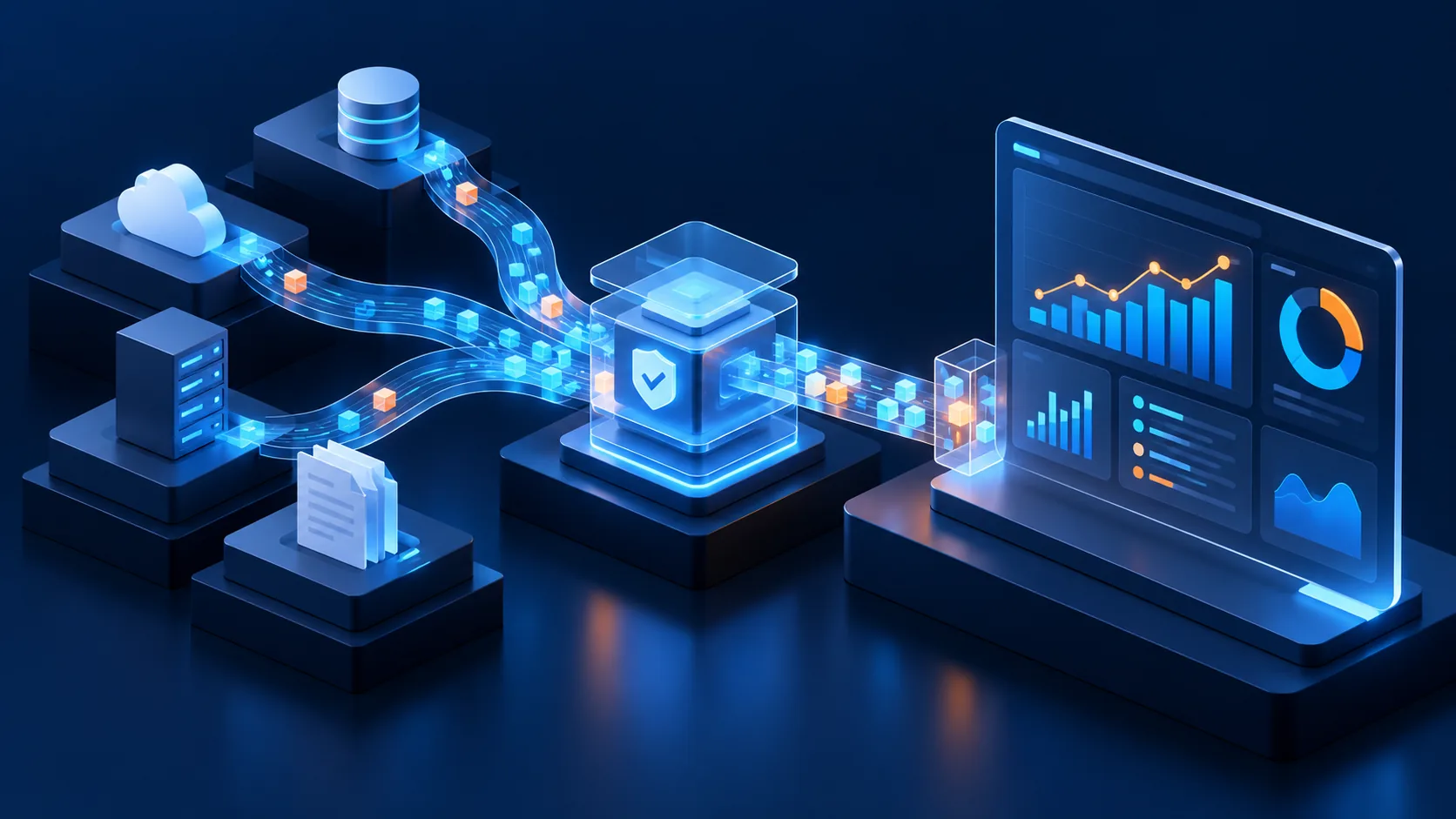
Consolidation from the operational systems into a model that supports the questions the business actually asks, with lineage back to the source transaction.
IngestionModellingLineage
Engineering · Data
Most operational data problems are not analytics problems. They are consistency problems — the same concept recorded three ways in three systems. We fix the foundation first, then build the reporting and automation that sit on top of it.
The business problem
The reporting exists. It is just not believed, because the figures disagree with each other and everyone has learned which version to quote depending on the audience.
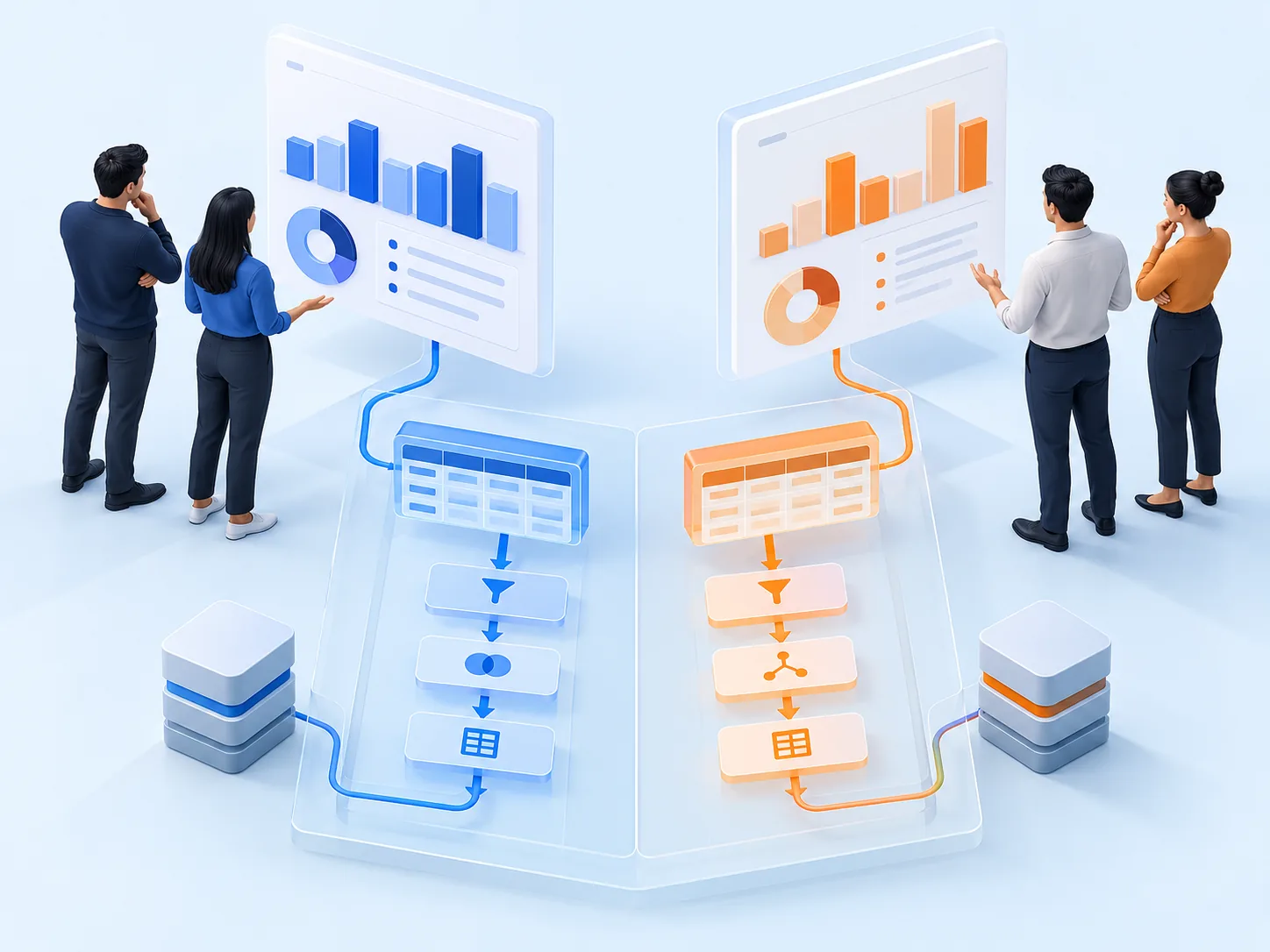
The same metric is calculated differently in two systems and nobody owns the definition.
Reports are assembled manually each month by someone who has become a single point of failure.
Data arrives late enough that decisions are made before it does.
Duplicate and inconsistent records make aggregate numbers quietly wrong.
Analysts spend most of their time preparing data rather than analysing it.
Nobody can trace a figure back to the transaction that produced it.
Our approach
The order matters and it is almost always inverted. Building a dashboard on inconsistent definitions produces a very presentable number that is wrong, and the presentation makes it harder to challenge.
So we start with the definitions — what a booking is, when revenue is recognised, what counts as an active customer — and get them agreed by the people who will be measured on them. That conversation is organisational rather than technical, and it is where the real work is.
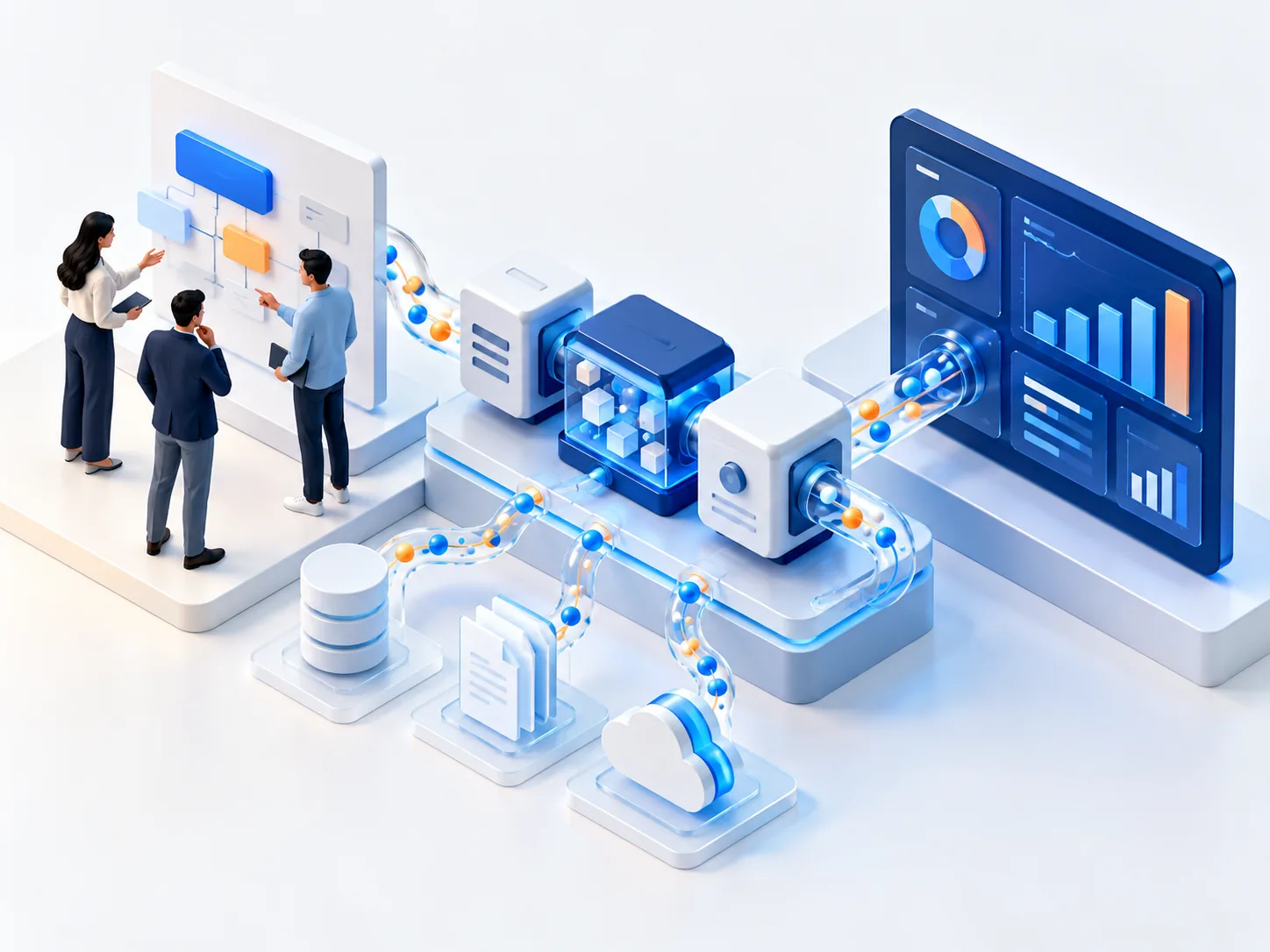
Then the engineering: pipelines that consolidate reliably, quality checks that catch problems before a dashboard shows them, and lineage that lets someone trace a figure back to the transaction behind it. Automation of the repetitive work on top of that data is usually the highest-return part and the last thing anyone gets to.
Capabilities
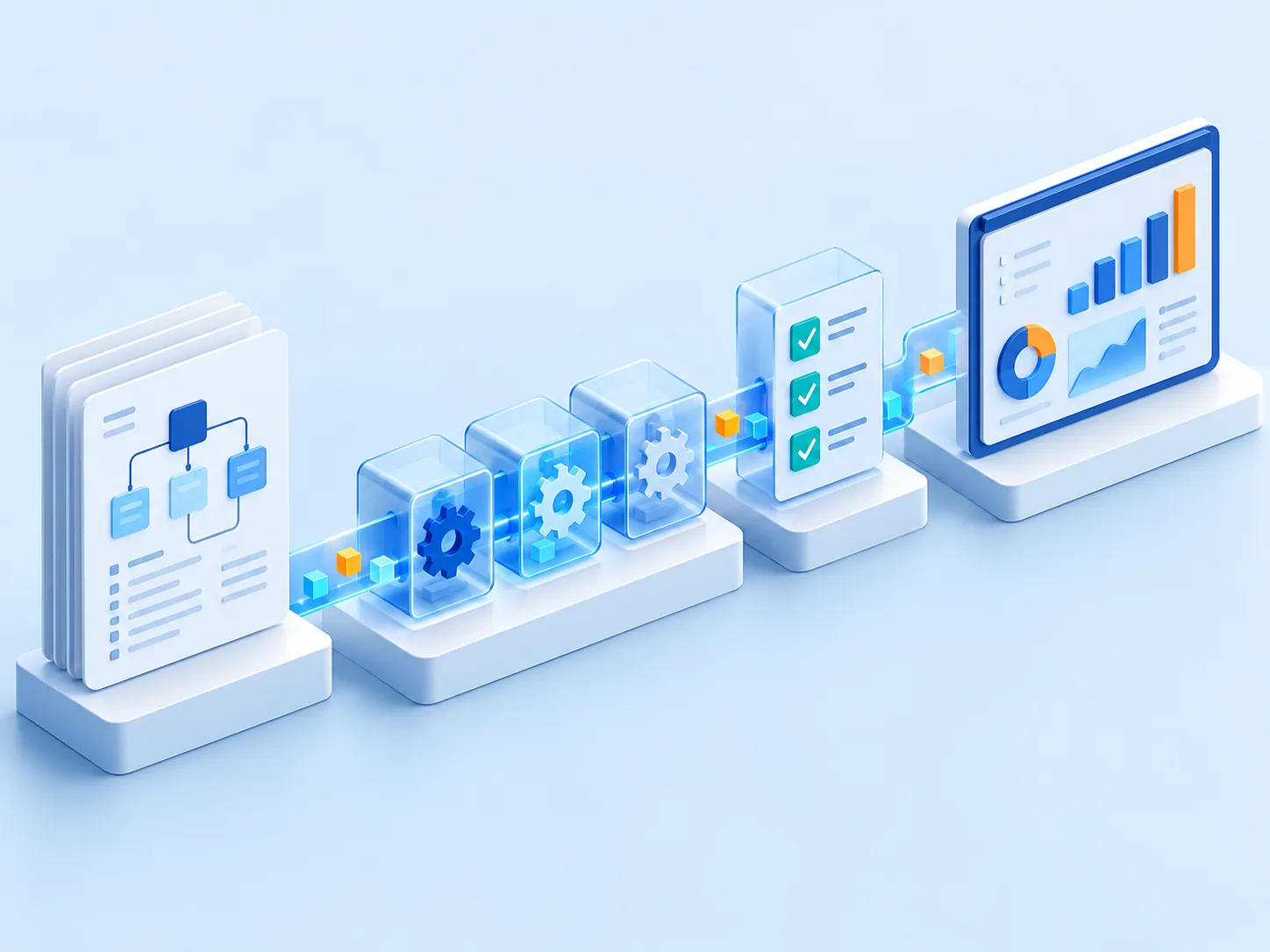
Where an engagement starts is decided by which of these is currently costing the most.
01
Consolidation from the operational systems into a model that supports the questions the business actually asks, with lineage back to the source transaction.
02
Reporting that refreshes on its own, uses agreed definitions, and is trusted well enough that meetings argue about the decision rather than the number.
03
Recurring manual work — reconciliations, exports, checks, escalations — moved to scheduled jobs that alert when something genuinely needs a person.
04
Establishing whether your data can actually support the AI use case being proposed. This is frequently the quiet reason an AI initiative stalls, and it is cheaper to discover first.
Delivery model
Scope and sequence are agreed before engineering begins, and every stage is reviewable.
01
Get the handful of metrics that matter defined and signed off by the people measured on them. Everything downstream depends on this and it cannot be delegated to engineering.
02
Establish where each figure genuinely originates, including the spreadsheets and manual steps that are part of the real process whether or not they appear on the diagram.
03
One domain end to end, with quality checks and reconciliation, before widening. A broad shallow pipeline hides exactly the problems that matter.
04
Retire the monthly manual process and make sure the automated version reconciles against it before the manual one stops.
05
Move the recurring work that sits above the data onto scheduled jobs, with alerting for the cases that genuinely need attention.
How we work together
Start with a conversation. Commit to scoped work only when a deeper review or a build is genuinely the right next step — and only once the scope is written down.
Start here — free call
01
Free30 minutes
One workflow, discussed with a solutions architect. What it costs you today, what is technically in the way, and whether anything further is warranted.
02
USD 5,0004 weeks
A scoped review when the picture is genuinely unclear — several systems, an unproven integration, or a decision nobody can size yet.
03
From USD 25,000Scoped per engagement
An agreed priority turned into working software, connected systems or a governed AI workflow, delivered in stages you can release and review.
Larger platform programmes start at USD 75,000. All figures are in USD and are starting points rather than quotes — scope, integration surface and the number of systems involved move the number. Commercial terms are always confirmed in writing before work begins.
Before we talk
Often, but not always, and not as a first purchase. Plenty of operational reporting problems are solved by fixing definitions and a handful of integrations. Buying a platform before establishing the definitions tends to produce an expensive, well-architected version of the same disagreement.
Yes. The tool is rarely the constraint. If your team already knows one, keeping it is usually the right call — the value is in the foundation underneath, and switching tools mid-engagement adds change management to a problem that did not need it.
Directly, and it is often the missing prerequisite. A large share of stalled AI initiatives stall on data — inconsistent, inaccessible, or not trustworthy enough to act on. Establishing readiness is cheaper than discovering the gap halfway through an implementation, and we would rather find it in week two.
Your business does, and that is the point of running the definition work as a business conversation rather than an engineering one. We document them and set up the process for changing them, but a definition owned by a consultancy is a definition that drifts the moment the engagement ends.
Keep exploring
Start with a conversation
Bring us the process that is slowing you down, the system that will not connect, or the platform that needs to evolve. We will tell you what we would do about it — and whether you need us at all.
Free · 30 minutes with a solutions architect · No obligation to commission an audit · sales@appnox.ai