
01
Guest request workspace
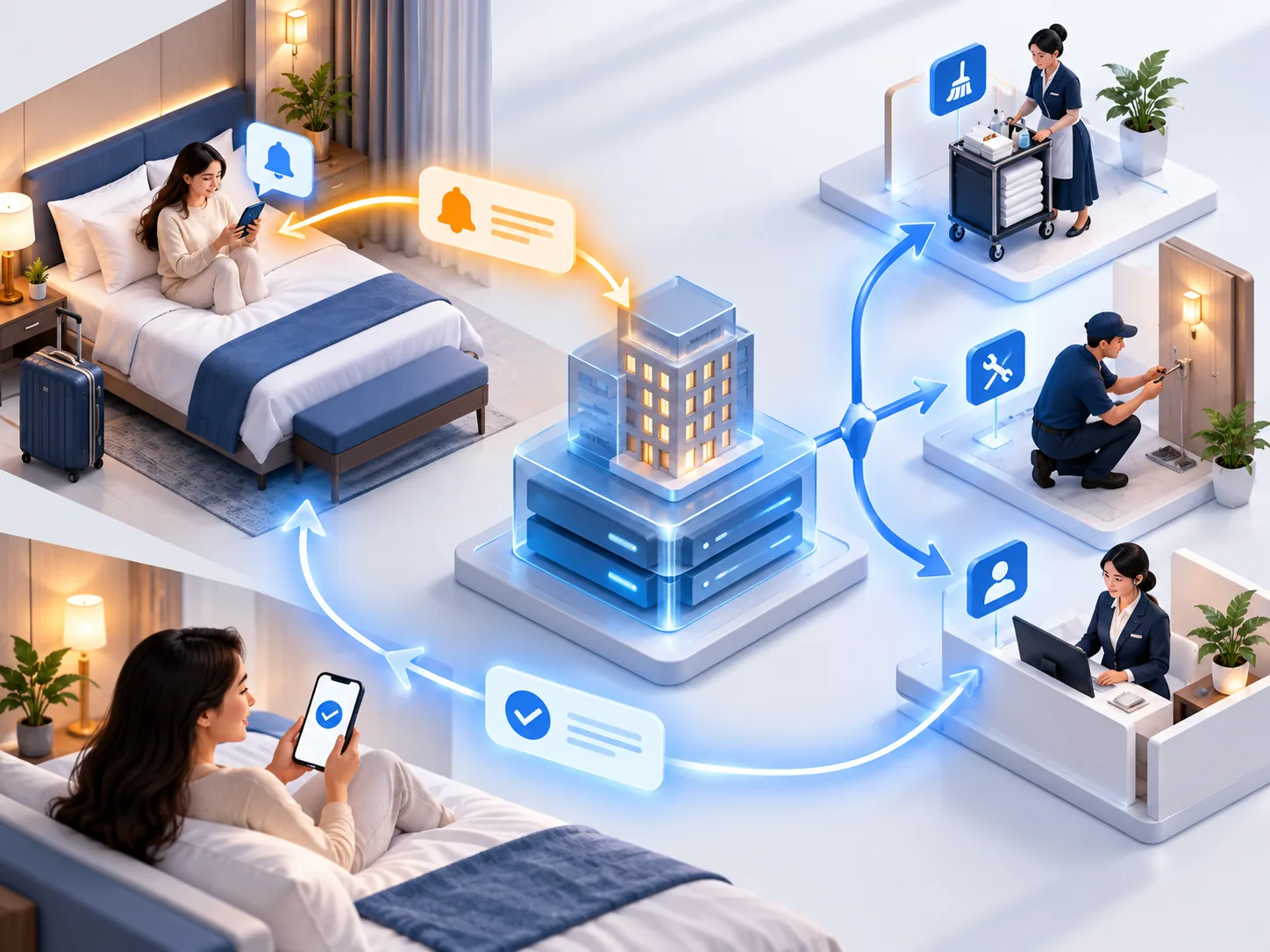
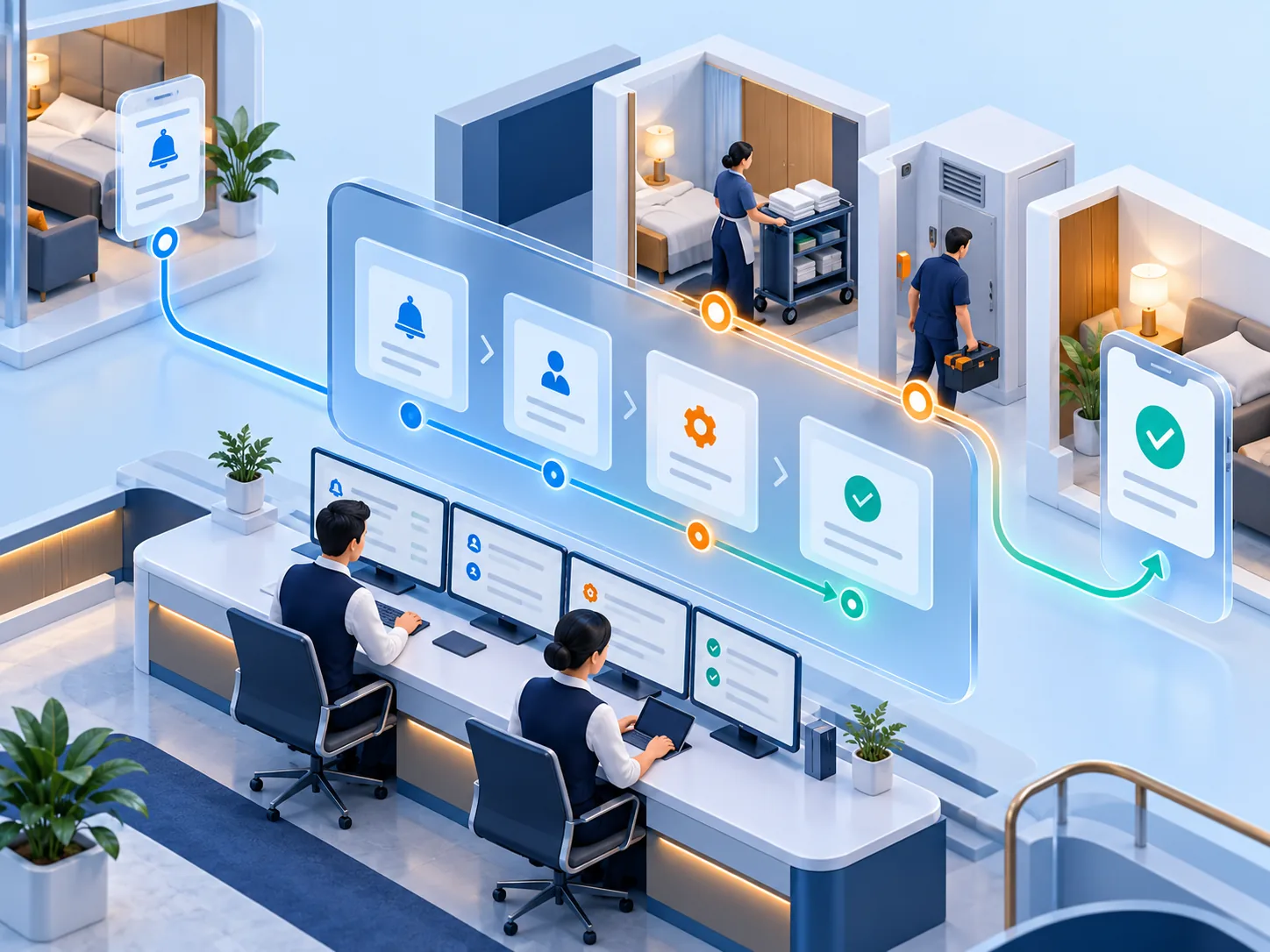
Requests from every channel in one queue, routed to the right team with the context attached and tracked until they are actually resolved.
Multi-channelRoutingResolution
Travel technology · Hospitality
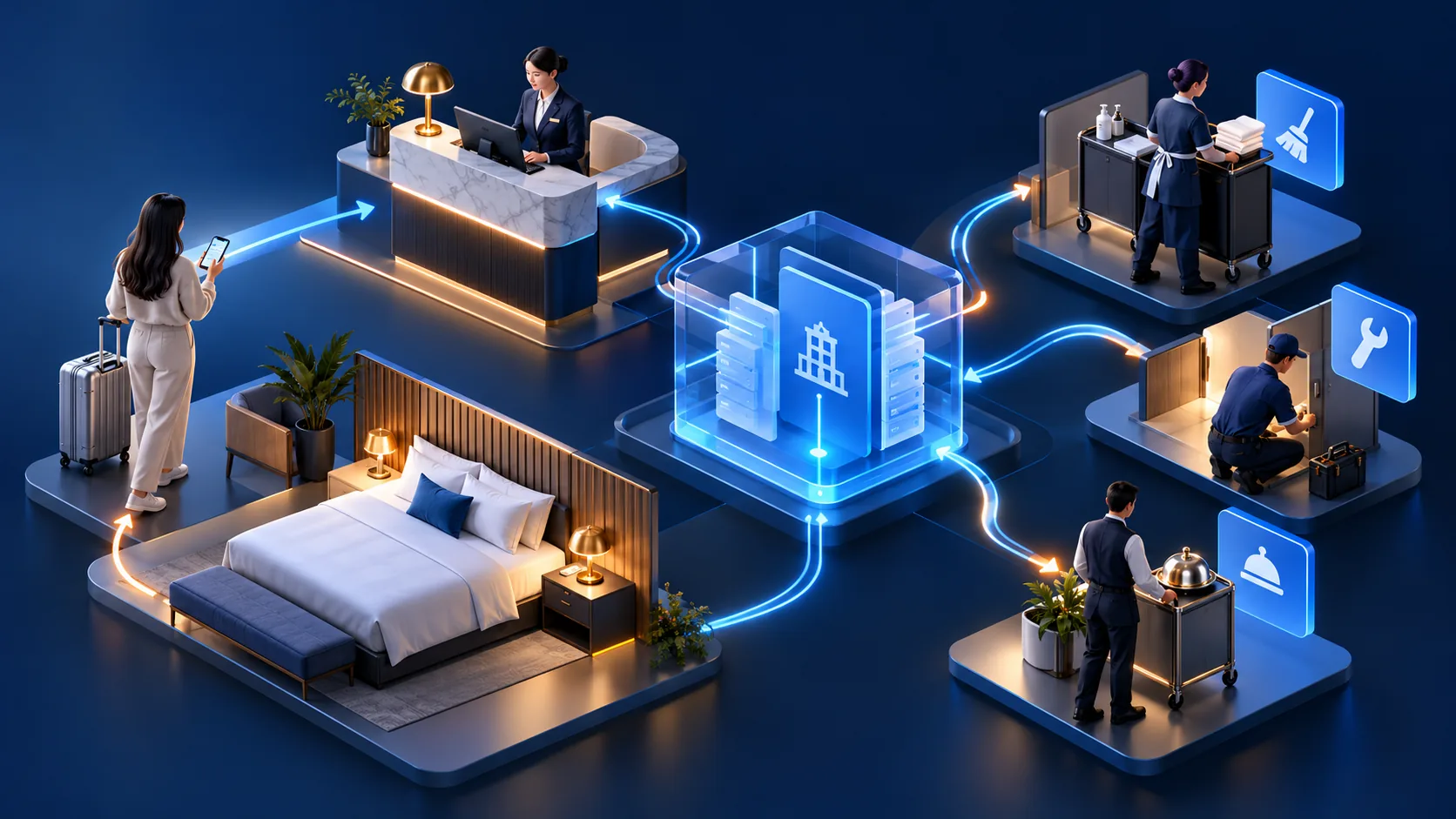
Property teams lose hours a day to re-entering information that already exists somewhere else in the building. We connect the systems behind the front desk so staff spend their attention on guests rather than on reconciliation.
The business problem
Guest expectations move faster than most property systems can keep up with. The gap is filled by staff manually moving information between a property management system, a booking channel, a messaging tool and a spreadsheet that somebody maintains personally.
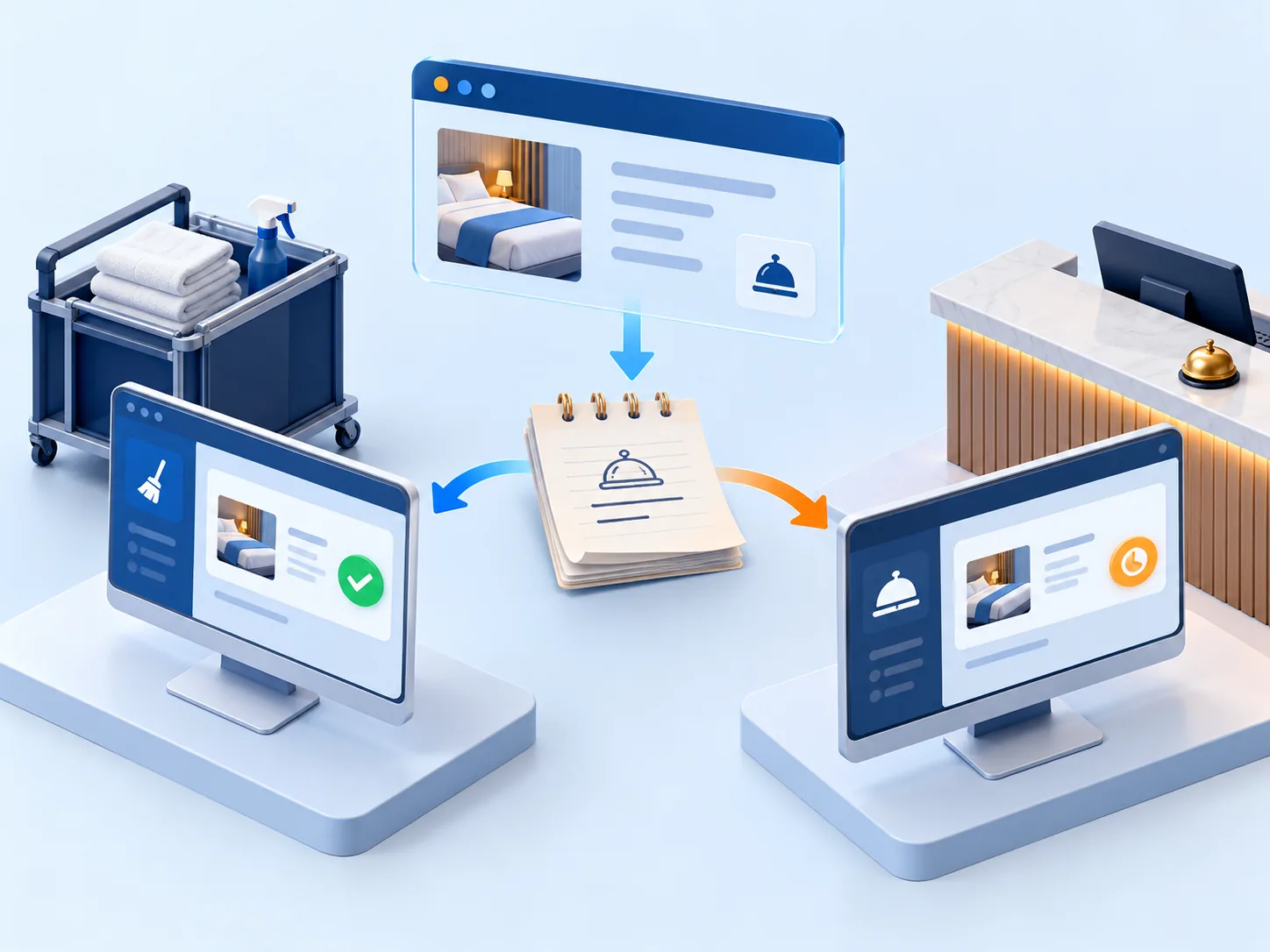
The same guest detail is entered into the PMS, the channel manager and a handover sheet.
Requests arrive on four channels and are tracked on none of them consistently.
Housekeeping and front desk work from different versions of the same information.
Handover between shifts depends on a document somebody remembered to update.
Group and event bookings are managed largely outside the systems entirely.
Nobody can see, at property level, what is actually consuming staff time.
Our approach
Most properties do not need another system. They need the systems already in place to stop requiring a human to carry information between them, which is both the cheapest intervention available and the least frequently proposed.
We begin by following the information rather than the software: where a guest detail first appears, every place it is re-entered, and which of those re-entries a system could do instead. That trace is usually uncomfortable reading and it makes the priorities obvious.
Automation then goes where it removes transcription, not where it removes judgement. A guest request routed to the right team with the right context is worth more than a chatbot answering questions the front desk was never the bottleneck on.
Capabilities
For groups, the same work has to hold across properties that rarely run identical systems or processes.
01
Requests from every channel in one queue, routed to the right team with the context attached and tracked until they are actually resolved.
02
The integrations that remove transcription between the systems the property already runs — scoped against what each vendor genuinely permits.
03
Assistance where it removes clerical load: prepared responses, prioritised task lists and handover assembled from the system rather than from memory.
04
A consistent operational picture across properties that do not all run the same systems, which is the normal condition in any group that has grown by acquisition.
Delivery model
Scope and sequence are agreed before engineering begins, and every stage is reviewable.
01
Trace guest data through the property and count the re-entries. This is a short exercise that reorders most priority lists.
02
Property systems vary enormously in what they expose. We establish this early because it determines what is possible far more than the design does.
03
Start with the single most repeated transcription. It is usually unglamorous and it is usually the biggest single win available.
04
Prove it in a live property with real shifts, including the nights and weekends where the process differs from the documented one.
05
Extend to other properties, expecting differences in systems and process rather than assuming the first configuration transfers.
How we work together
Start with a conversation. Commit to scoped work only when a deeper review or a build is genuinely the right next step — and only once the scope is written down.
Start here — free call
01
Free30 minutes
One workflow, discussed with a solutions architect. What it costs you today, what is technically in the way, and whether anything further is warranted.
02
USD 5,0004 weeks
A scoped review when the picture is genuinely unclear — several systems, an unproven integration, or a decision nobody can size yet.
03
From USD 25,000Scoped per engagement
An agreed priority turned into working software, connected systems or a governed AI workflow, delivered in stages you can release and review.
Larger platform programmes start at USD 75,000. All figures are in USD and are starting points rather than quotes — scope, integration surface and the number of systems involved move the number. Commercial terms are always confirmed in writing before work begins.
Before we talk
It depends on what your PMS exposes and what your vendor agreement permits, which varies far more across this category than in most software. We establish it during assessment rather than assuming, and if the answer is that a supported interface does not exist, we say so before scope is agreed.
Almost never, and we would be sceptical of an engagement that opened there. The PMS is rarely the actual problem. The problem is usually everything around it that requires a human to carry information in and out, which is both cheaper and less disruptive to fix.
Not by default, and guest-facing conversation is usually not where the value sits. The bottleneck in most properties is internal — information moving between systems and teams. If a guest-facing assistant is genuinely warranted, that is a separate decision made on its own merits rather than bundled in.
It is the normal case for any group that grew by acquisition, and it is why we design the integration layer to absorb variation rather than requiring uniformity first. Standardising every property before doing anything useful is a programme that rarely finishes.
Keep exploring
Start with a conversation
Bring us the process that is slowing you down, the system that will not connect, or the platform that needs to evolve. We will tell you what we would do about it — and whether you need us at all.
Free · 30 minutes with a solutions architect · No obligation to commission an audit · sales@appnox.ai