
Hospitality operations guide
Where property time actually goes
Most hotels do not need another system. They need the ones already in place to stop requiring a person to carry information between them.
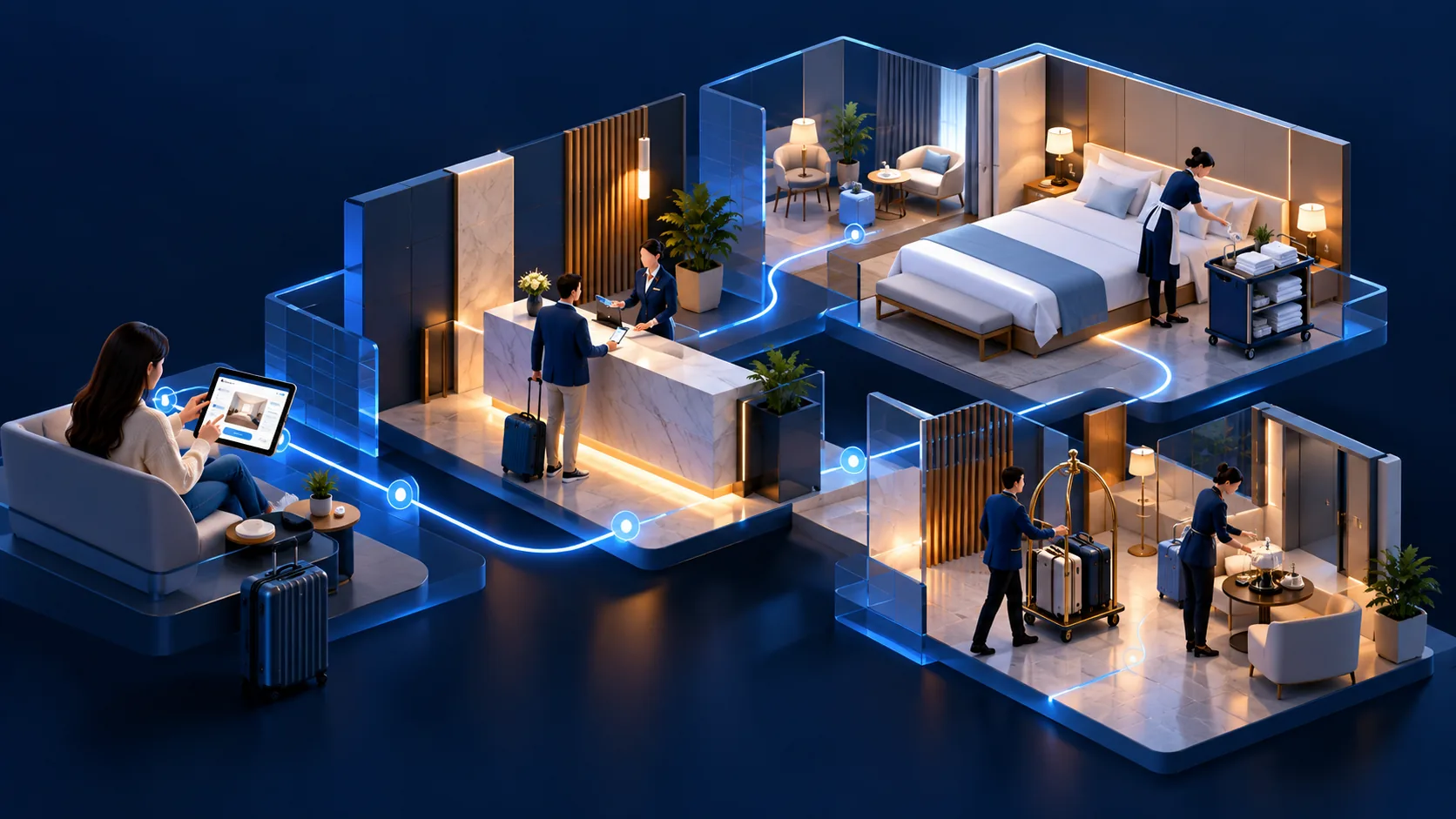
Ask a property team what would help and you will usually hear about a system they wish they had. Trace a guest detail through the building and you will usually find the answer is a system they already have, connected to another one they already have.
The exercise below takes an afternoon and reorders most priority lists.
Trace one guest detail
Pick something specific — an arrival time, a dietary requirement, a room preference. Find where it first enters the property's systems. Then follow it and note every place a person re-enters it.
A typical trace runs: booking channel, property management system, a handover sheet, a housekeeping list, and a messaging thread. Five appearances, four of them typed by someone who could have been doing something else.
Multiply by arrivals per day and the cost becomes uncomfortable. It is also, unlike most operational costs, entirely removable.
The duplication is invisible because it is distributed
No single re-entry takes long. That is exactly why it persists — it never appears as a problem worth escalating, and each individual instance is easier to do than to complain about.
Aggregated across a shift, it is frequently the largest single consumer of front-of-house time after direct guest interaction. Aggregated across a group, it is a headcount.
Establish what the systems will actually permit
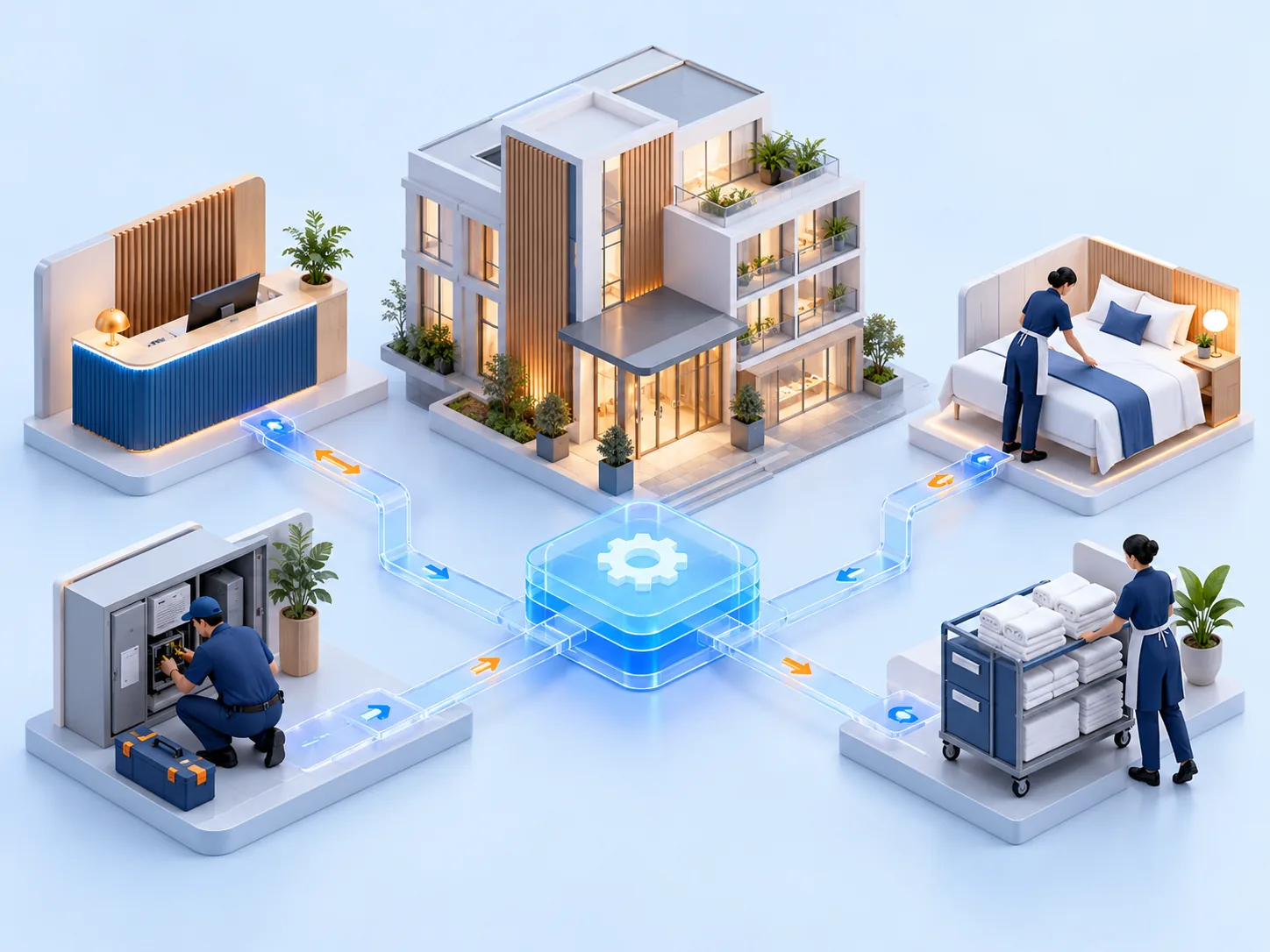
Property systems vary enormously in what they expose. Some have capable, documented interfaces. Some have an interface available under a commercial agreement. Some have neither, and a vendor who would prefer you did not ask.
This determines feasibility far more than any design decision, and it is worth establishing before scoping rather than after. Where a supported interface does not exist, the honest options are a different approach or a different vendor — not a workaround presented as equivalent.
Fix the largest duplication first, not the most visible
The instinct is to start with something guests can see. The economics point elsewhere: the highest-volume transcription, which is almost always internal and almost always unglamorous.
Guest-facing improvements are easier to justify and harder to measure. Internal duplication is harder to get approved and produces a number you can put in front of a finance director.
The best first project in a property is usually the one nobody would put in a press release.
Pilot across the shifts that differ
Any process works on a Tuesday morning with full staffing. The test is a Saturday night, a Sunday handover, a bank holiday arrival wave with two people short.
Piloting only during comfortable conditions produces a system that is abandoned during the first difficult week, which is precisely when it was supposed to help.
For groups: design for variation, not standardisation
Any group that has grown by acquisition runs different systems and different processes across its properties. A programme that requires standardisation before delivering anything useful is a programme that rarely finishes.
The alternative is an integration layer that absorbs variation — a consistent operational view over properties that do not run identical software. Slower to design, dramatically more likely to roll out.
Written from delivery experience in hospitality operations. Specific outcomes depend on the systems in place and the access their vendors permit.
Keep reading
Related work

Start with a conversation
Bring us the workflow, not the technology.
If something in this piece describes your operation, thirty minutes with a solutions architect is usually enough to establish what is worth doing about it.
Free · 30 minutes with a solutions architect · No obligation to commission an audit · sales@appnox.ai